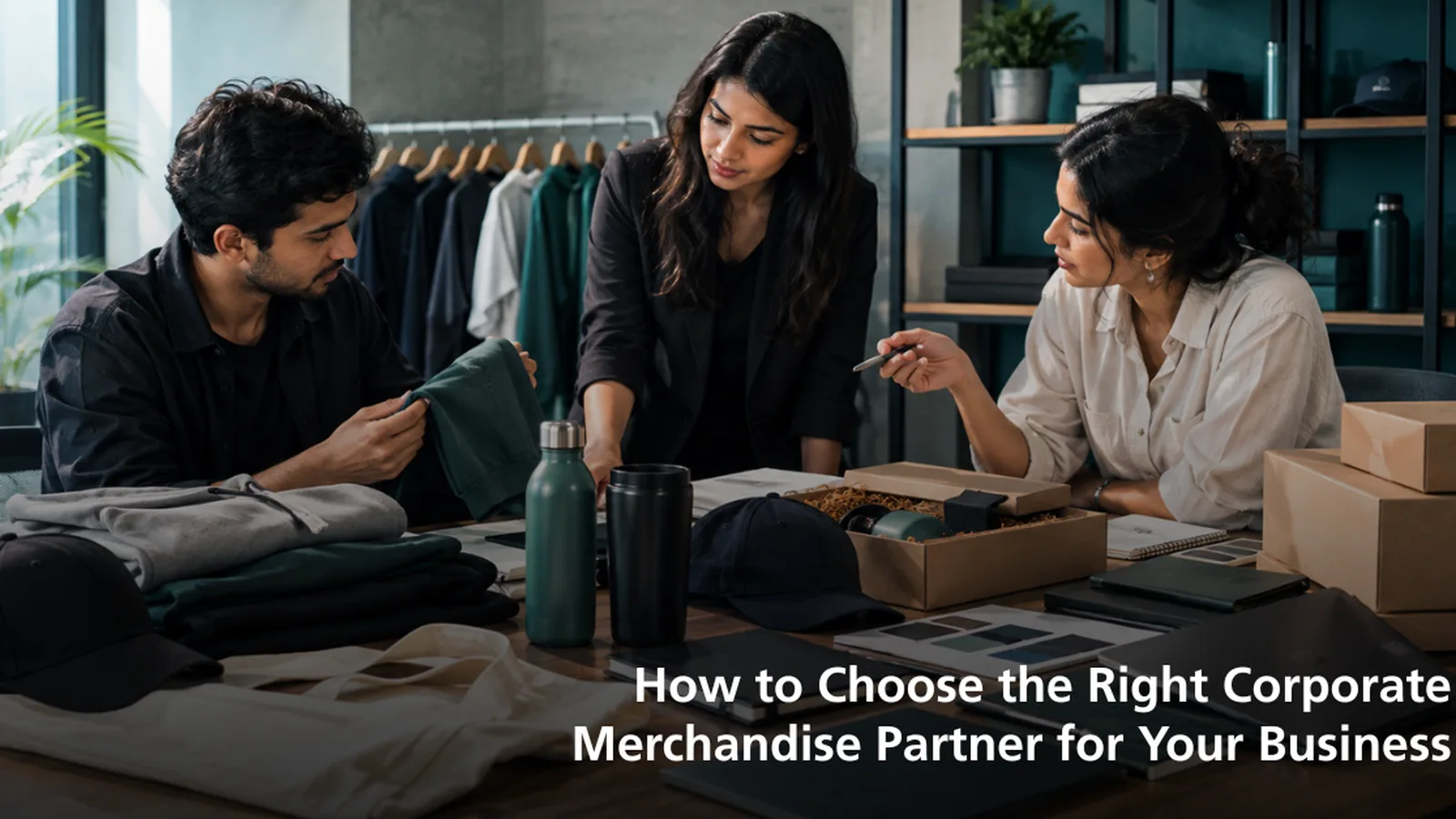
Selecting a corporate merchandise partner is a decision that affects far more than a single order. The right partner shapes how consistently a brand shows up across every branded item a business distributes, how smoothly logistics run behind the scenes, and how much internal time is spent managing a process that should largely run itself. Yet many businesses choose a merchandise supplier the same way they might choose a one-off vendor for office supplies based mostly on price and end up dealing with inconsistent quality, missed deadlines, or designs that never quite match the brand.
Understanding What a Merchandise Partner Actually Does
A genuine merchandise partner does considerably more than print a logo onto a catalogue item. This includes design consultation to match items to brand identity, sourcing materials that balance quality, cost, and increasingly sustainability, managing production timelines and quality control, and handling fulfillment and delivery logistics sometimes across multiple countries. Understanding this full scope helps businesses evaluate potential partners against the right criteria, rather than comparing quotes for a single item in isolation.
Evaluating Design and Production Capability
The clearest indicator of a partner's capability is the quality of past work. Reviewing a supplier's portfolio for consistency in colour accuracy, print or embroidery quality, and material selection across different types of items gives a realistic sense of what to expect. Businesses should also ask about the specific production techniques available screen printing, embroidery, laser engraving, sublimation since different items and design requirements call for different methods, and a partner limited to one or two techniques may not be the right fit for every project.
Assessing Reliability on Timelines
Merchandise is often tied to fixed dates, an event, an onboarding start date, a product launch leaving little room for delays. A strong partner should be able to speak clearly about realistic production timelines, including buffer time for sampling and approval, rather than promising unrealistically fast turnarounds that increase the risk of rushed, lower-quality output. Asking for references from clients with similarly time-sensitive projects provides a useful reality check on this point.
Checking for Genuine Sustainability Credentials
As sustainability becomes a more central consideration in merchandise decisions, it is worth asking potential partners specific, substantive questions: what certifications do their materials carry, where are their factories located, and what visibility do they have into labour practices across their supply chain. A partner who can answer these questions clearly and specifically is a better long-term fit than one who relies on vague language like "eco-friendly" without being able to back it up.
Considering Regional Market Knowledge
For businesses operating in Singapore and Malaysia, a partner with direct regional experience brings advantages that a generic international supplier may not: familiarity with climate-appropriate materials, awareness of local design preferences, and established logistics for delivery within the region without the delays and costs associated with international shipping. Saltycustoms, based in the region, works with businesses across both markets and understands these local considerations firsthand.
Looking for Flexibility Across Order Sizes
Business needs change throughout the year: a small batch of client gifts one month, a large employee-wide distribution the next. A partner capable of handling both smaller, more frequent orders and larger bulk runs, without a significant quality or service drop-off between the two, offers considerably more flexibility than a supplier built primarily around large minimum order quantities.
Evaluating Communication and Account Management
The day-to-day experience of working with a merchandise partner often comes down to communication. A responsive account contact, clear proofing and approval processes, and transparent updates on production status make an enormous difference to how smoothly a project runs, particularly for businesses managing multiple concurrent merchandise programmes across departments or regions.
Reviewing Pricing Transparency
Pricing should be clear and itemised covering base product cost, customisation method, any setup fees, and shipping rather than bundled into a single opaque figure that makes it difficult to compare against other quotes or to understand where costs could be adjusted. A partner willing to walk through pricing transparently is generally more trustworthy for an ongoing relationship than one who resists breaking down the numbers.
Starting with a Smaller Trial Project
Before committing to a large annual programme, it is often worth starting with a smaller trial order, a single event's merchandise, or one round of client gifts to evaluate a new partner's actual performance on design, quality, and delivery before scaling up. This lower-risk approach reveals far more about a partner's real capabilities than a proposal document or portfolio ever can.
Building a Long-Term Relationship, Not a One-Off Transaction
The strongest merchandise programmes come from partnerships that develop over multiple cycles, where a supplier gradually builds a genuine understanding of a business's brand, audience, and recurring needs. This kind of ongoing relationship, rather than a series of disconnected one-off orders across different suppliers, tends to produce more consistent quality and a smoother process over time. Saltycustoms approaches client relationships this way, working as an ongoing corporate merchandise partner rather than a transactional vendor.
Questions to Ask Before Signing On
Before committing to a longer-term arrangement, it is worth asking a prospective partner directly about minimum order quantities, typical production lead times for both standard and rush orders, how design revisions are handled and how many rounds are included, and what happens if a shipment arrives damaged or incorrect. Clear, specific answers to these practical questions reveal far more about how a partnership will actually function day to day than any glossy proposal document.
Red Flags Worth Watching For
Certain signals tend to indicate a weaker long-term fit: reluctance to provide samples before a large order, vague answers about material sourcing or factory locations, unusually fast quoted timelines that leave no room for quality checks, and pricing that cannot be broken down into clear components. None of these signals is necessarily disqualifying on its own, but taken together they suggest a partner more focused on closing a single transaction than building a dependable, ongoing relationship.
Involving Multiple Stakeholders in the Selection Process
Merchandise decisions often affect several departments: marketing, HR, and procurement each have a stake in how items look, how much they cost, and how reliably they arrive. Involving representatives from each of these functions early in the partner selection process, rather than leaving the decision to a single department, tends to surface concerns and requirements that would otherwise only emerge after a contract is already signed, saving considerable friction later.
Conclusion
Choosing the right corporate merchandise partner is worth the same diligence a business would apply to any other significant vendor relationship reviewing design and production capability, reliability on timelines, sustainability credentials, and regional market knowledge, rather than defaulting to whichever quote is lowest. A partner who understands a business's brand and audience over time, from initial concept through final delivery, consistently delivers stronger, more consistent results than a series of one-off transactions ever could.
Frequently Asked Questions
Q1. What should a business look for first when choosing a corporate merchandise partner? Start by reviewing the partner's portfolio for consistency in quality, colour accuracy, and finish across different item types, since this gives the clearest real-world sense of what to expect. Q2. Why does regional experience matter when choosing a merchandise partner in Singapore or Malaysia? A partner based in the region understands climate-appropriate materials, local design preferences, and regional logistics, which generally results in faster delivery and more relevant design choices than a generic international supplier.
Q3. How can a business verify a supplier's sustainability claims?
Ask specific questions about material certifications, factory locations, and labour practice transparency. A credible partner should be able to answer these clearly rather than relying on vague terms like "eco-friendly." Q4. Is it better to start with a large order or a smaller trial project with a new merchandise partner? A smaller trial project such as one event or one round of client gifts is generally the safer starting point, since it reveals a partner's actual capability on design, quality, and delivery before committing to a larger programme.
Meta Description:
Learn how to choose the right corporate merchandise partner for quality products, custom branding, reliable delivery, and long-term business value.
WordPress Excerpt:
Discover how to choose the right corporate merchandise partner, from product selection and customization to quality, pricing, delivery, and reliable service.
If you measure merchandise like a channel, you will like how our performance marketing team thinks.
Most companies don't think carefully about their merchandise supplier until something goes wrong. A shipment arrives late for a launch event. A "custom" product turns out to be a generic item with a logo slapped on the front. A vendor who was responsive during the sales pitch goes quiet the moment a deadline gets tight. By the time these problems surface, the damage is already done not just to the timeline, but to how the brand looked in front of employees, clients, or partners. Choosing a corporate merchandise partner deserves the same scrutiny most businesses apply to choosing a software vendor or a marketing agency. It's a decision with real consequences, and the criteria that matter aren't always the ones that show up first in a sales conversation.
Why This Decision Is Harder Than It Looks
Corporate merchandise sits in an unusual spot. It's not core to the business, so it rarely gets the same due diligence as other supplier relationships yet it's often the most visible, most tangible touchpoint a brand has with the outside world. A poorly made T-shirt or a mistimed onboarding kit reflects directly on the company that sent it, regardless of how good the actual product or service is. The businesses that get burned usually made the same mistake: they chose a partner based on price per unit and catalogue size, without asking harder questions about capacity, consistency, and what happens when something goes wrong.
What Actually Matters When Evaluating a Partner
Production and sourcing capability, not just a product catalogue. A long list of items means little if the supplier can't back it with reliable manufacturing and quality control. Ask how items are sourced, who manufactures them, and what quality checks happen before anything ships. A partner who can explain this process clearly rather than deflecting to "we handle everything" is a partner who actually understands their own supply chain. Speed without sacrificing quality. Some merchandise needs exist on a compressed timeline: a new hire starting next week, an event confirmed with short notice. A good partner should be able to offer a genuinely fast option of pre-designed, production-ready items without that speed meaning lower quality or less design control. If a supplier only has one speed, that's a limitation worth knowing about before it becomes a problem. Geographic reach that matches how the business actually operates. A company with teams or clients across multiple countries needs a partner who can deliver consistently across those markets not just from a single warehouse. Ask directly: where do you manufacture, where do you ship, and what does last-mile delivery actually look like in the specific countries this business operates in? Design support, not just print-on-demand. The best merchandise partners function as a creative extension of the brand, not just a fulfillment house. That means being able to advise on colour matching, material choice, and how a design will actually look and feel on a finished product catching problems before production, not after a shipment arrives looking different from what was approved. Transparency around minimum order quantities and pricing. Vague or shifting minimums are a common source of frustration, especially for growing businesses ordering in unpredictable quantities. A trustworthy partner will be upfront about MOQs, lead times, and total cost including shipping and duties before a business commits. Track record with businesses of a similar scale and industry. A supplier experienced in serving enterprise clients with complex, recurring orders (onboarding kits, multi-market campaigns) will handle those situations very differently from one used to smaller, one-off orders. Ask for examples of clients with a similar order pattern to what your business actually needs.
A Simple Test Before Signing Anything
Before committing to a merchandise partner, it's worth running a smaller test order first, something lower-stakes than a major campaign or a client gifting programme. How the supplier handles that first order, including how they communicate if something needs adjusting, tells a business far more than any sales deck. Reliability under normal conditions is easy to demonstrate. Reliability under a tight deadline or an unexpected hiccup is what actually separates a good long-term partner from one that will eventually cause a problem.
The Real Cost of Choosing Wrong
The cost of a poor merchandise partner rarely shows up as a single bad invoice. It shows up as a missed deadline that embarrasses a marketing team in front of leadership, an onboarding kit that makes a new hire's first impression of the company feel cheap, or a client gift that arrives looking nothing like what was approved. None of these are catastrophic on their own, but they compound and they're avoidable with the right partner selected from the start. Getting this right isn't about finding the cheapest supplier or the biggest catalogue. It's about finding a partner capable of matching production quality, speed, and design integrity to how the business actually operates consistently, order after order, not just on the first one.
FAQs:
1. What's the biggest mistake businesses make when choosing a merchandise partner? The most common mistake is choosing based on price per unit and catalogue size alone, without evaluating production capability, consistency, or what happens when something goes wrong. A low unit price means little if the order arrives late, poorly finished, or inconsistent across a batch. Businesses that dig into sourcing, quality control, and communication practices upfront tend to avoid the costly surprises that show up later, usually right before an important deadline.
2. How do I know if a supplier can actually deliver on tight timelines?
Ask directly about their fastest realistic turnaround and whether it requires sacrificing design control or quality. A credible partner should be able to explain a genuinely fast option often built around pre-designed, production-ready items without vague reassurances. If a supplier can't clearly describe how they handle urgent orders, that's a sign that speed isn't actually built into their process, and last-minute requests may not go smoothly. 3. Why does geographic reach matter if my business only operates in one country right now? Even single-market businesses often grow into needing multi-country delivery remote hires, regional clients, or expansion into new markets. Choosing a partner with limited reach can mean switching suppliers later, right when merchandise needs become more complex. It's worth asking a potential partner about their delivery footprint early, even if it's not an immediate requirement, so the relationship doesn't need to be rebuilt from scratch later.
4. What should I ask about minimum order quantities (MOQs)?
Ask for MOQs in writing, per product category, along with what happens if an order falls slightly below or above that threshold. Some suppliers apply MOQs inconsistently or add unexpected fees for smaller runs, which can be a problem for businesses with unpredictable order sizes like a growing company that doesn't yet know exactly how many new hires it will onboard next quarter. Clear, consistent MOQ policies are a good sign of a well-run supplier. 5. Is it worth paying more for a merchandise partner that also offers design support? Often, yes. A partner who can advise on colour matching, material choice, and how a design will translate onto a finished product catches problems before production rather than after a shipment arrives looking different than expected. This kind of support reduces the odds of costly reprints or a final product that doesn't reflect the brand accurately, which frequently offsets any difference in per-unit pricing. 6. What's a good way to test a new merchandise partner before committing to a big order? Place a smaller, lower-stakes test order first, something separate from a major campaign, client gifting programme, or time-sensitive event. Pay close attention not just to the finished product, but to how the supplier communicates if anything needs adjusting along the way. A partner's behaviour under normal conditions reveals less than how they handle a hiccup or a tight turnaround, and a small test order is a low-risk way to see that in action before a larger commitment is on the line.