Introduction
A customer may interact with a brand for only a few seconds before forming an initial impression. They might see a website, notice a product package, scroll past a social media post, receive an email, or encounter a branded T-shirt at an event. In each case, creative design helps shape what they understand about the business. That makes design far more than a visual exercise. Effective design gives a brand a recognizable identity. It can communicate personality, reinforce positioning, simplify complex information, and create consistency across physical and digital experiences. When done properly, it also makes a business easier to remember. For companies investing in custom merchandise, the importance of creative design becomes even more apparent. A logo printed on a product is not automatically good branding. The product, artwork, materials, colors, placement, and overall presentation need to work together. Saltycustoms combines creative services with custom merchandise, manufacturing, production, and fulfillment, helping businesses connect the creative idea with the final physical product. This guide explains how businesses can use creative design more strategically when building a memorable brand.
What Is Creative Design in Branding?
Creative design in branding is the process of translating a company's identity and strategic positioning into visual and physical experiences. It can include everything from a logo and color palette to merchandise artwork, packaging, digital assets, and promotional materials. The important distinction is that creative design should have a purpose. A design may be attractive but still fail if customers cannot understand what the business represents. Another design may be relatively simple yet highly effective because it is distinctive, consistent, and aligned with the audience.
Why Design Influences Brand Perception
People make visual judgments quickly. Before reading a company's full website or understanding its product offering, customers often notice its visual presentation. Typography, spacing, color, imagery, and composition all contribute to an immediate impression. A polished visual system can make a business appear organized and credible. A confusing or inconsistent one can create doubt. This does not mean every business needs an expensive or highly elaborate identity. In fact, simplicity can be extremely effective. The objective is to create visual cues that customers can recognize and associate with the company over time. When those cues appear consistently across websites, packaging, social media, presentations, event materials, and merchandise, they gradually strengthen brand recognition.
The Core Elements of Effective Creative Design
Visual Identity
A visual identity gives the brand its recognizable appearance. The logo is one part of it, but the system usually extends to typography, colors, imagery, graphic elements, layouts, and design rules. A strong identity should be flexible enough to work across different environments. For example, a logo may need to appear on a website header, a business card, an embroidered cap, a presentation, a product label, and a large event backdrop. One version will not always work perfectly everywhere. The identity therefore needs adaptable applications while maintaining a consistent core.
Typography
Typography affects how a brand communicates. A clean sans-serif typeface may feel modern and direct. A more traditional serif can create a different impression. Display typography can introduce personality, while neutral supporting fonts can improve readability. The goal is not to select a fashionable font simply because it looks good. Typography should support the brand's positioning and remain practical across its major applications.
Color
Color is one of the strongest visual recognition tools available to a brand. A carefully defined palette creates consistency across websites, packaging, merchandise, advertising, and other brand materials. But color selection also needs practical consideration. A color that looks accurate on a monitor may appear different when printed on fabric or another physical material. Production methods, substrates, and finishes can affect the final appearance. Creative teams therefore need to think about both visual identity and production reality.
Imagery and Graphics
Photography, illustrations, icons, patterns, and graphic elements help establish a distinctive visual language. A technology company may use clean product photography and structured graphics. A lifestyle brand may rely more heavily on expressive imagery. A creative agency might develop illustrations that become recognizable assets in their own right. The key is consistency. Randomly selecting visuals for every campaign can weaken recognition even when the individual images look attractive.
Step-by-Step: Building a Consistent Creative System
Step 1: Start With the Brand Strategy
Design should begin with an understanding of the brand rather than a blank canvas. The creative team should know the company's audience, positioning, personality, values, and communication goals. Without this information, design decisions become subjective.
Step 2: Identify the Visual Opportunity
Study competitors and identify patterns within the category. Which visual styles dominate? Are businesses using similar colors? Are certain design approaches becoming predictable? This research can reveal opportunities for differentiation. Standing out does not mean being deliberately strange. It means identifying a visual direction that feels relevant but is not interchangeable with every competitor.
Step 3: Build the Core Identity
Develop the logo system, typography, colors, imagery, and graphic elements. At this stage, the goal is to create a system rather than a collection of unrelated assets.
Step 4: Test Real Applications
This is where identity becomes practical.
Apply it to:
- Website layouts
- Social media
- Presentations
- Packaging
- Promotional materials
- Employee apparel
- Corporate gifts
- Event displays
- Custom merchandise
A design that looks impressive in a presentation may behave very differently when printed on fabric or produced at a smaller size.
Step 5: Document the Rules
Brand guidelines should explain how the creative system is used. The document does not need to become unnecessarily complicated. It simply needs to give internal teams and external partners enough information to reproduce the brand consistently.
Why Custom Merchandise Needs Creative Thinking
Merchandise is often approached from a procurement perspective. A company decides it needs 500 T-shirts, 300 notebooks, or 200 bottles and then starts comparing suppliers. That approach focuses on quantity. A creative approach starts with the brand experience.
What should people feel when they receive the product?
What would make them want to use it?
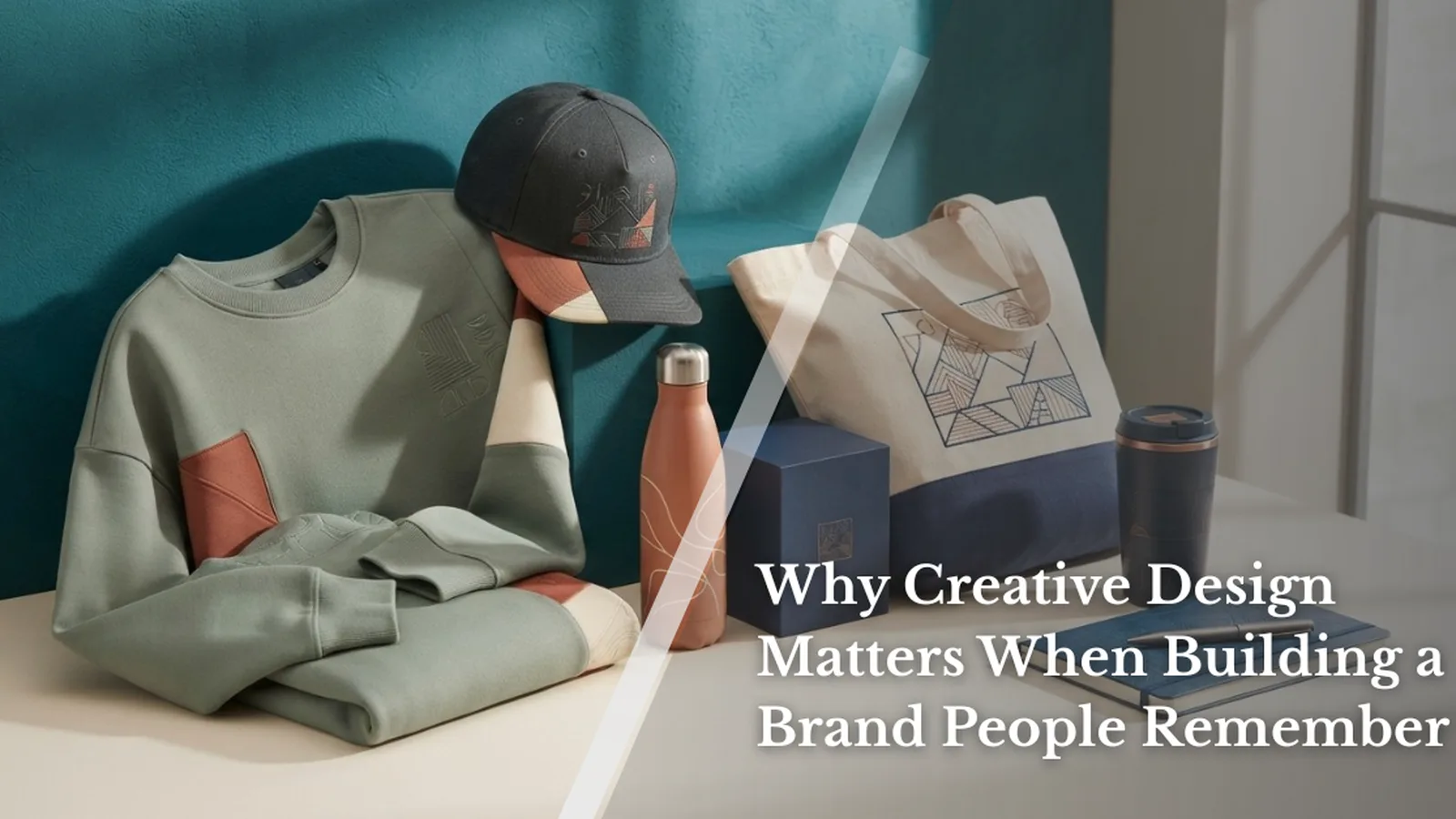
What design would make the item feel like a genuine part of the brand rather than a promotional object? These questions can completely change the outcome. A corporate hoodie, for example, could simply feature a large company logo. Or it could use a more considered design system with subtle branding, distinctive typography, an internal phrase, a campaign concept, or a visual element associated with the company. The second approach gives the product a reason to exist beyond advertising.
Designing Merchandise That People Actually Want
The most successful branded products often have one thing in common: people want to use them. A product can generate significantly more brand exposure when it becomes part of someone's everyday life. This means businesses should consider usefulness alongside aesthetics.
A few practical questions can help:
- Will the recipient actually use the product?
- Does the product fit the brand's audience?
- Is the quality consistent with the company's positioning?
- Does the design work without overwhelming the product?
- Would someone choose to keep or reuse it?
These questions are especially relevant when building employee merchandise programs or corporate gifting collections. Saltycustoms offers a broad range of merchandise categories, including apparel, caps and headwear, drinkware, tech gadgets, office products, travel merchandise, lifestyle products, eco-friendly products, and gift boxes. That variety allows creative teams to select products based on the intended experience rather than forcing every brand into the same promotional format.
From Digital Artwork to Production
One of the biggest challenges in branded merchandise is translating digital creativity into physical production. A design created for a website may contain gradients, fine lines, shadows, or complex color combinations. Those elements may not translate directly to embroidery, screen printing, engraving, or other production techniques. This is where technical design preparation becomes essential. Saltycustoms provides production artwork services designed to prepare creative files for physical manufacturing. This can involve converting artwork into appropriate formats, creating scalable graphics, preparing print-ready files, and adapting designs for specific production requirements.
The underlying principle is simple:
Creative design should consider the final product from the beginning. When designers understand how an asset will ultimately be produced, they can make better decisions during the creative process.
How Saltycustoms Connects Creative Design With Merchandise
The distance between design and manufacturing can create problems. A creative team may develop artwork without knowing how it will be produced. A supplier may then modify the design to make production easier, potentially changing the original concept. An integrated approach reduces that gap. Saltycustoms combines creative design with custom merchandise, manufacturing, production artwork, quality control, and fulfillment. This creates a workflow in which the creative concept can be considered alongside the physical product and its intended use. For businesses building a long-term merchandise program, that connection can help maintain brand consistency from the initial concept through final delivery.
Conclusion
Creative design is one of the primary ways a business turns its strategy into something people can see, understand, and remember. The strongest design does not exist simply to make a company look professional. It creates recognizable visual signals, reinforces positioning, improves consistency, and gives customers something tangible to associate with the brand. That becomes particularly powerful when creative design extends into physical experiences. From branded apparel and corporate gifts to packaging, event materials, tech accessories, and lifestyle products, custom merchandise can carry the same identity into everyday environments. With its combination of creative services, merchandise, production, and fulfillment, Saltycustoms can help businesses connect those stages and create a more consistent brand experience from concept to finished product. Good design catches attention. Great brand design gives people a reason to remember what they saw.
Frequently Asked Questions
1. Why is creative design important for building a memorable brand?
Creative design helps translate a brand's identity and positioning into recognizable visual and physical experiences. Consistent design across websites, packaging, social media, and merchandise can strengthen brand recognition over time.
2. What elements are included in effective creative design?
Effective creative design can include visual identity, typography, color, photography, illustrations, icons, patterns, layouts, and other graphic elements. These elements should work together as a consistent visual system.
3. How can creative design improve custom merchandise?
Creative design helps businesses create merchandise that feels like a genuine part of the brand rather than simply a promotional product. Design, product choice, usefulness, quality, and presentation can all contribute to a stronger brand experience.
4. Why should creative design consider production requirements?
Digital artwork may not translate directly to physical production methods such as embroidery, screen printing, or engraving. Considering production requirements early helps ensure the final merchandise maintains the intended design and brand quality.
Meta Title:
Why Creative Design Matters for Building a Memorable Brand
Meta Description:
Discover why creative design matters for building a memorable brand, strengthening visual identity, connecting with audiences, and creating lasting recognition.
Slug:
creative-design-for-memorable-brand
Focus Keyword:
Creative Design
WordPress Excerpt:
Discover how creative design helps businesses build memorable brands by creating a strong visual identity, connecting with audiences, and increasing brand recognition.
Merchandise lands better when the strategy behind it is clear. That is the core of our brand strategy work.