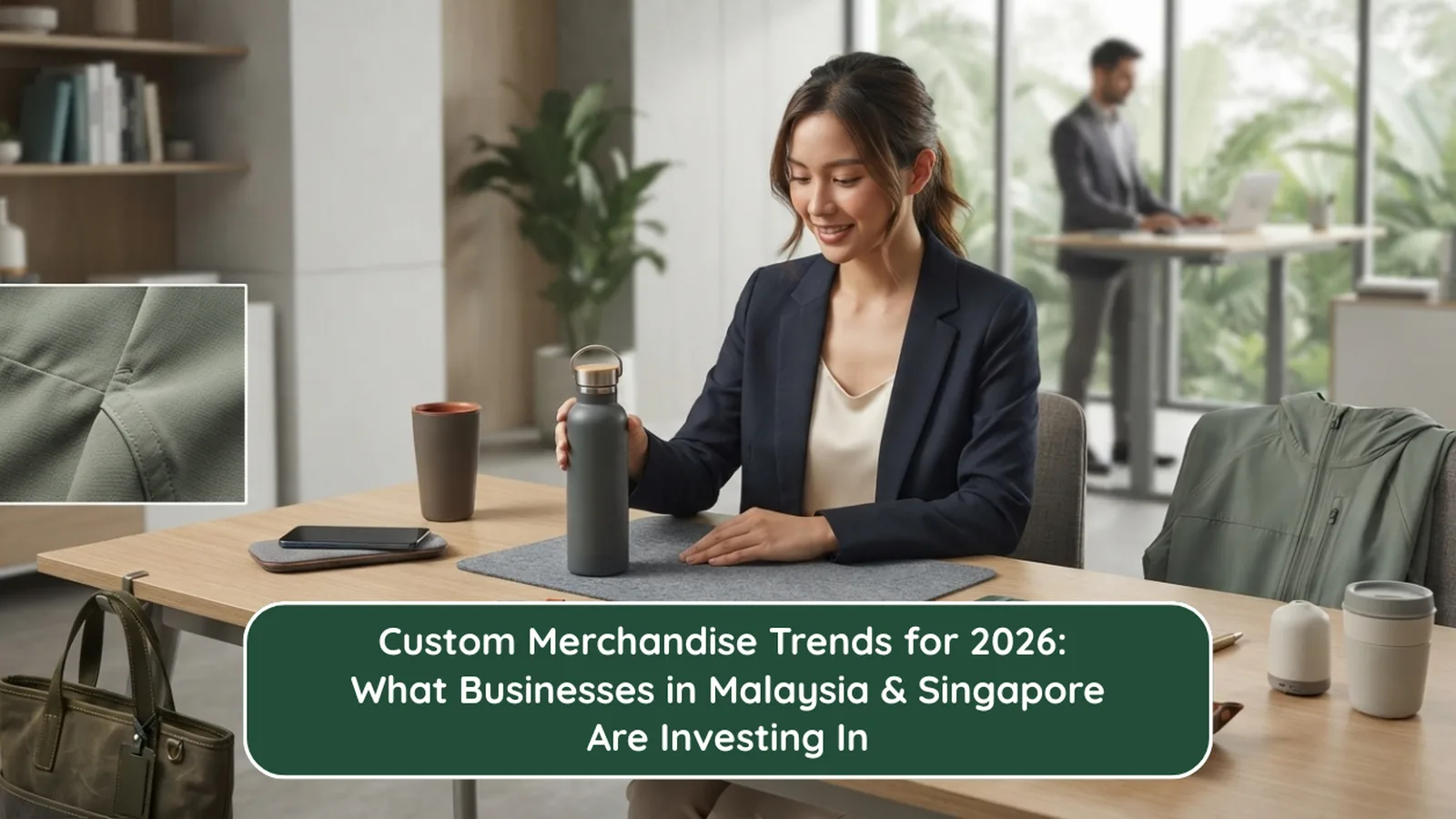
Corporate merchandise in Malaysia and Singapore has moved well past generic pens and stress balls. As businesses across the region compete for talent and client attention, the merchandise they choose has become a more deliberate reflection of brand values, quality standards, and, increasingly, sustainability commitments. Looking at where businesses are directing their merchandise budgets in 2026 gives a useful picture of what is genuinely working, rather than what simply looks good on a supplier's catalogue cover.
A Shift Toward Fewer, Better Items
One of the clearest trends across both markets is a move away from large-quantity, low-cost distributions toward smaller runs of genuinely well-made items. Businesses are increasingly comfortable spending more per unit if it means the item is actually used and kept, rather than discarded within days. This shift reflects a broader recognition that custom merchandise works best as a long-term brand touchpoint rather than a disposable giveaway.
Sustainability as a Baseline Expectation, Not a Differentiator
Sustainable materials recycled cotton, recycled polyester, FSC-certified paper packaging have moved from a nice-to-have feature to something clients and employees increasingly expect by default, particularly among businesses with public ESG commitments. Companies in Singapore and Malaysia sourcing merchandise in 2026 are asking suppliers pointed questions about material sourcing and certifications as a matter of course, rather than treating sustainability as an optional upgrade.
Tech-Enabled Merchandise Gaining Ground
Portable chargers, wireless charging pads, and Bluetooth-enabled accessories continue to grow in popularity, particularly for events and onboarding kits, since they solve a genuine daily problem for recipients working across long commutes, frequent travel, and hybrid office setups common across the region. These items tend to see high repeat use precisely because they address a practical need rather than serving purely as a branding vehicle.
Apparel with Genuine Everyday Wearability
Branded apparel in 2026 looks noticeably different from the boxy, logo-heavy polo shirts of a decade ago. Businesses are investing in better-fitted cuts, breathable fabrics suited to the region's climate, and understated branding with a small embroidered mark rather than a large printed logo because this kind of custom apparel gets worn far more often outside of work contexts, extending its visibility well beyond the office.
Regional Design Sensibility Over Generic Templates
There is a growing appetite for merchandise that reflects local design sensibility rather than templates borrowed from Western markets. Colour palettes, motifs, and packaging that feel considered for a Singaporean or Malaysian audience rather than adapted from a generic global catalogue resonate more strongly with both employees and clients in the region, and businesses increasingly ask suppliers for design input that reflects this local context.
Personalisation at Scale
Advances in production techniques have made light personalisation of a recipient's name, initials, or a small custom detail considerably more feasible even at moderate order volumes. Businesses are using this capability for onboarding kits and client gifts alike, since even a small personalised touch significantly increases how memorable an item feels, without requiring the fully bespoke production runs that personalisation once demanded.
Merchandise as Part of the Hybrid Work Experience
With hybrid work arrangements now standard across much of the region, merchandise increasingly serves a role in maintaining a sense of connection to company culture for employees who spend less time in a physical office. Home-office-oriented items, comfortable loungewear, quality desk accessories, insulated drinkware are seeing increased demand as businesses look for ways to keep remote and hybrid employees feeling connected to the brand.
Smaller, More Frequent Production Runs
Rather than committing to a single large annual order, more businesses are working with suppliers capable of smaller, more frequent production runs. This reduces the risk of overordering and unused stock, allows for quicker design refreshes, and gives businesses more flexibility to respond to specific occasions throughout the year rather than planning everything around one large distribution.
The Growing Role of Limited-Edition Merchandise
A number of businesses in the region are experimenting with limited-edition or seasonal merchandise runs tied to a specific campaign, festival, or company milestone, rather than maintaining a single static catalogue of branded items year-round. This approach creates a sense of occasion and scarcity that a standing catalogue item cannot replicate, and it gives businesses a natural reason to refresh their design language periodically rather than distributing the same item for years without variation.
Festive and Cultural Occasions Shaping Regional Demand
Both Singapore and Malaysia observe a calendar rich with cultural and festive occasions, and businesses are increasingly designing merchandise specifically around these moments rather than relying solely on Western-style holiday gifting. Items tied to festivals observed across the region's diverse communities give businesses a natural, culturally relevant reason to gift throughout the year, and tend to be received more warmly than generic, imported seasonal designs that do not reflect the local calendar.
Budget Reallocation Toward Fewer, Higher-Impact Touchpoints
Alongside the shift toward better-quality items, many businesses are also reallocating merchandise budgets away from broad, low-value distributions such as giving every trade show visitor an identical low-cost item toward a smaller number of higher-impact touchpoints, such as curated gifts for key accounts or premium onboarding kits for new senior hires. This reallocation reflects a broader recognition that merchandise spend delivers more value when concentrated where the relationship stakes are highest, rather than spread thinly across every possible interaction.
What This Means for Businesses Planning Their 2026 Merchandise Budget
Businesses reviewing their merchandise plans for the year ahead should expect to allocate more per unit toward fewer, better items; ask suppliers directly about sustainable material options and certifications; and consider where tech-enabled or wellbeing-oriented items could better serve a hybrid workforce than traditional promotional items. Saltycustoms has been tracking these shifts closely across its client base in Singapore and Malaysia, and works with businesses to translate these broader trends into merchandise programmes suited to their specific audience and budget.
Choosing a Partner Who Understands the Regional Market
Trends shift quickly, and what works well in one market does not always translate directly to another. A merchandise partner with direct experience across both Singapore and Malaysia is better positioned to advise on regional preferences, climate-appropriate materials, and culturally relevant design choices than a generic global supplier working from a templated catalogue.
Conclusion
The direction of custom merchandise in 2026 across Malaysia and Singapore points clearly toward quality over quantity, genuine sustainability credentials, and design that reflects the region rather than borrowing from elsewhere. Businesses that align their merchandise programmes with these trends now are likely to see stronger engagement and recall than those still relying on the generic, low-cost approaches of previous years.
Frequently Asked Questions
Q1. What is the biggest shift in corporate merchandise trends for 2026 in Malaysia and Singapore? The clearest shift is away from large-quantity, low-cost giveaways toward smaller runs of higher-quality items that recipients are more likely to actually use and keep. Q2. Is sustainable merchandise now expected by clients and employees in the region? Increasingly yes sustainable materials and transparent sourcing have moved from a differentiator to a baseline expectation, particularly among businesses with public ESG commitments.
Q3. What types of merchandise are performing best for hybrid workforces?
Items that support a home-office setup or daily commute quality desk accessories, insulated drinkware, tech accessories such as chargers tend to see the strongest ongoing use among hybrid and remote employees. Q4. Why does regional design sensibility matter for merchandise in Singapore and Malaysia? Merchandise that reflects local colour, motif, and packaging preferences resonates more strongly with regional audiences than generic templates adapted from other markets, and tends to be better received by both employees and clients.
Meta Title:
Custom Merchandise Trends 2026 in Malaysia & Singapore
Meta Description:
Explore the top custom merchandise trends for 2026 and discover what businesses in Malaysia and Singapore are investing in for branding and marketing.
Slug:
custom-merchandise-trends-2026-malaysia-singapore
Focus Keyword:
Custom Merchandise Trends 2026
WordPress Excerpt:
Discover the top custom merchandise trends for 2026 and see what businesses in Malaysia and Singapore are investing in to strengthen branding, engagement, and visibility.
Researching how buyers actually find suppliers today? Our SEO and AI search optimisation covers exactly that.